Connecticut: Exploring New Possibilities With Apple Vision Pro
An assistive technology specialist from the Connecticut Tech Act Project shows a technology representative the Apple Vision Pro device.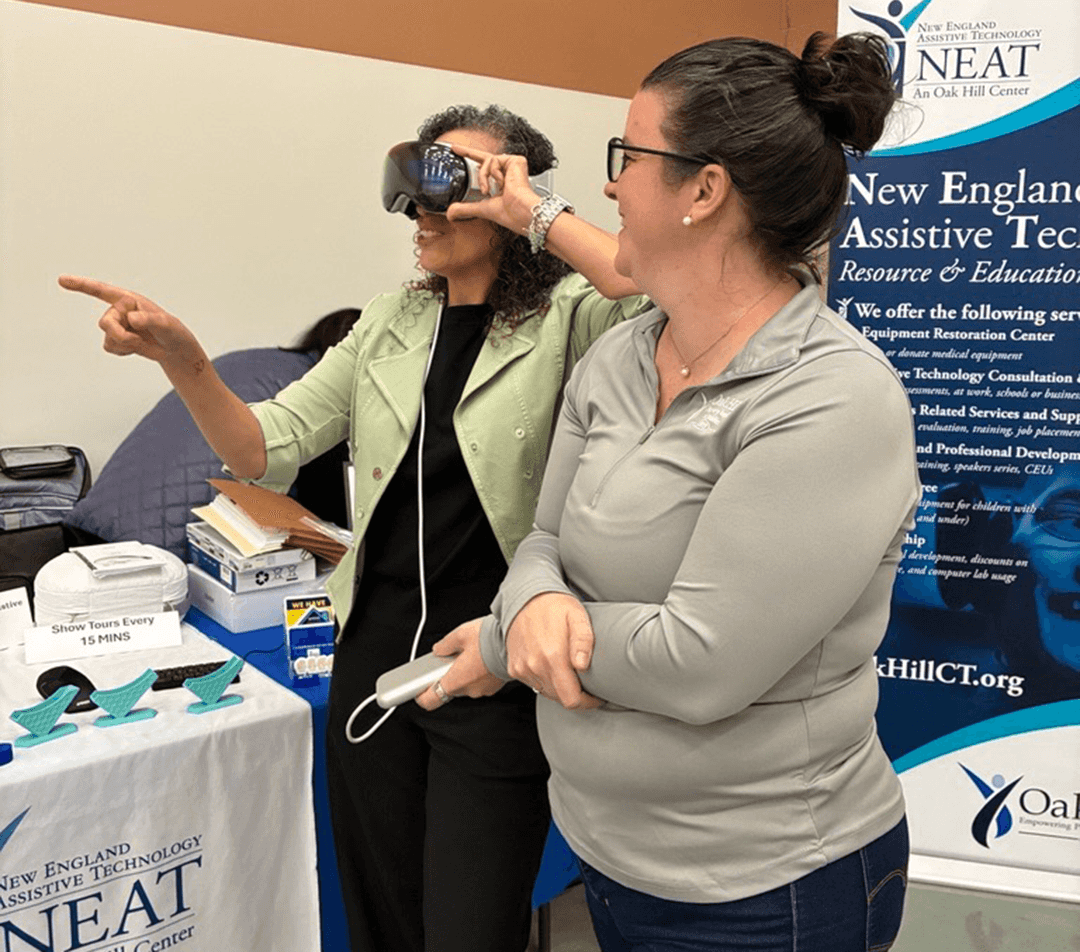
April 22 is Assistive Technology Awareness Day! Assistive Technology (AT) plays a very important role in supporting independence for people with disabilities. AT includes any device, equipment, or system that is used to enhance functional abilities of people with disabilities.
Across 56 US states and territories, AT programs transform access to life-changing technology! These statewide, comprehensive, consumer-driven programs help people of all ages and abilities test and get access to the AT tools they need to live, learn, work, and thrive—wherever life takes them.
Check out this story from the Connecticut Tech Act Project:
Exploring New Possibilities with Apple Vision Pro
A technology representative was interested in trialing the Apple Vision Pro to learn more about its features, including built-in accessibility tools and its potential to enhance workplace productivity. During the trial, she explored the platform and identified her personal preferences. She noted her preference for using pointing gestures and not relying on eye control.
She was also able to assess practical considerations, such as how heavy the unit felt when worn and how she or future clients might position the battery pack during use. An assistive technology specialist from the Connecticut Tech Act Project provided guidance and feedback throughout the trial, sharing insights from previous demonstrations and exploration of the device. This experience helped the representative better understand how she could use the Apple Vision Pro for her own employment tasks and potentially introduce the technology to support clients in their work.
Want to learn more about what State and Territory Assistive Technology programs do to improve access, expand the availability, and raise awareness of AT for people with disabilities and older adults? Visit CATADA, the Institute for Community Inclusion’s central hub for data, best practices, consumer stories, and resources focused on improving access to AT as reported by State and Territory Assistive Technology Programs.